
How a drug level is read from a drop of blood
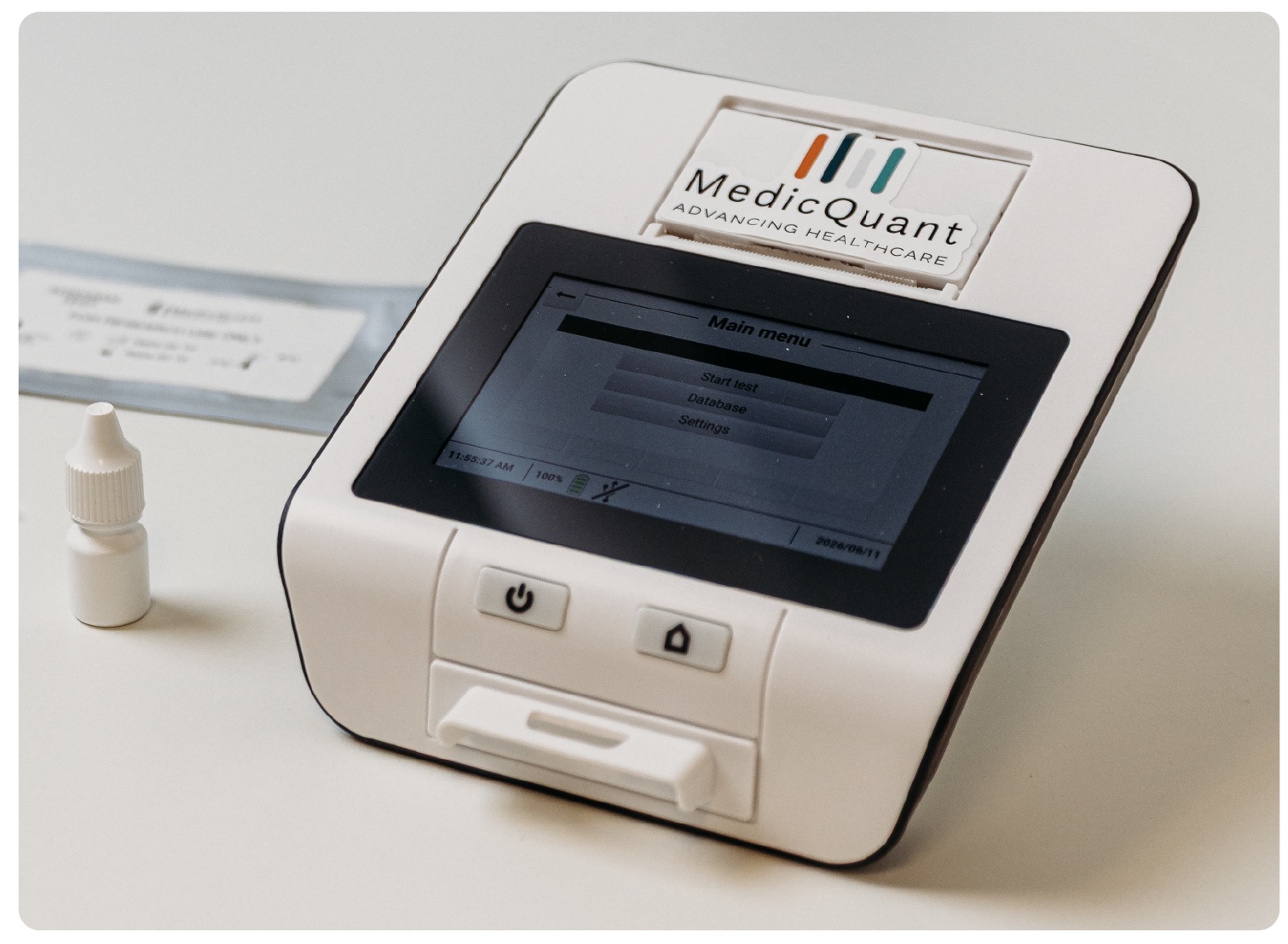
MedicQuant combines a disposable flow-front immunoassay cartridge with a compact fluorescence reader. DNA nanotechnology turns the presence of a drug into a ratio of two colours of light.
One self-contained cartridge
The patent-pending cartridge holds everything the test needs: a blood separation filter and two dried reagents on a glass fibre strip. Staff add whole blood and insert it into the reader.
There is no pipetting of plasma and no centrifuge in the emergency department.
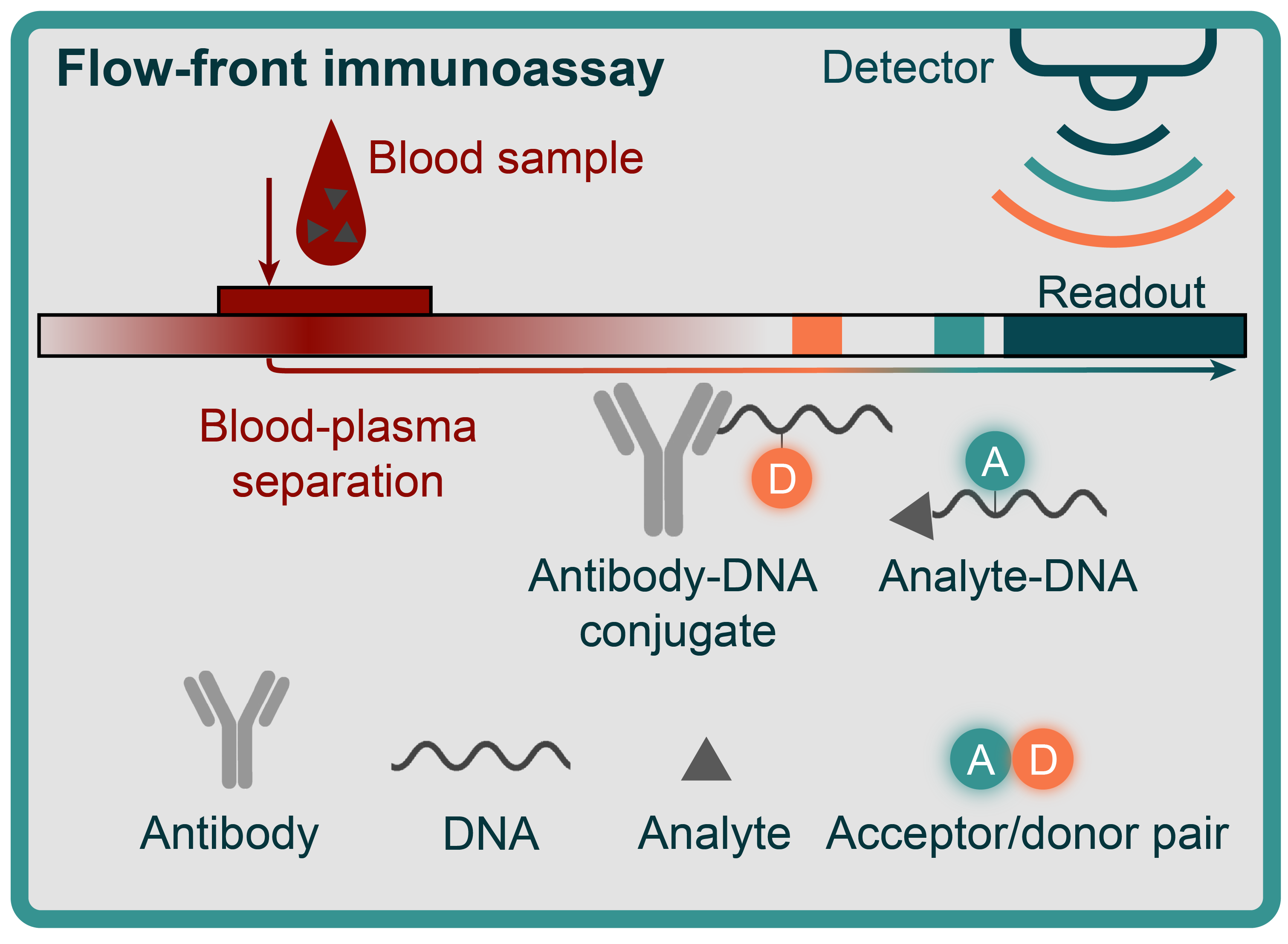
A flow-front immunoassay
Red cells are retained by the filter while plasma moves through by capillary action. On its way, the plasma front picks up an antibody-DNA conjugate and an analyte-DNA strand.
The drug in the sample competes with the analyte-DNA for the antibody. Everything happens in the moving front, on its way to the read window.
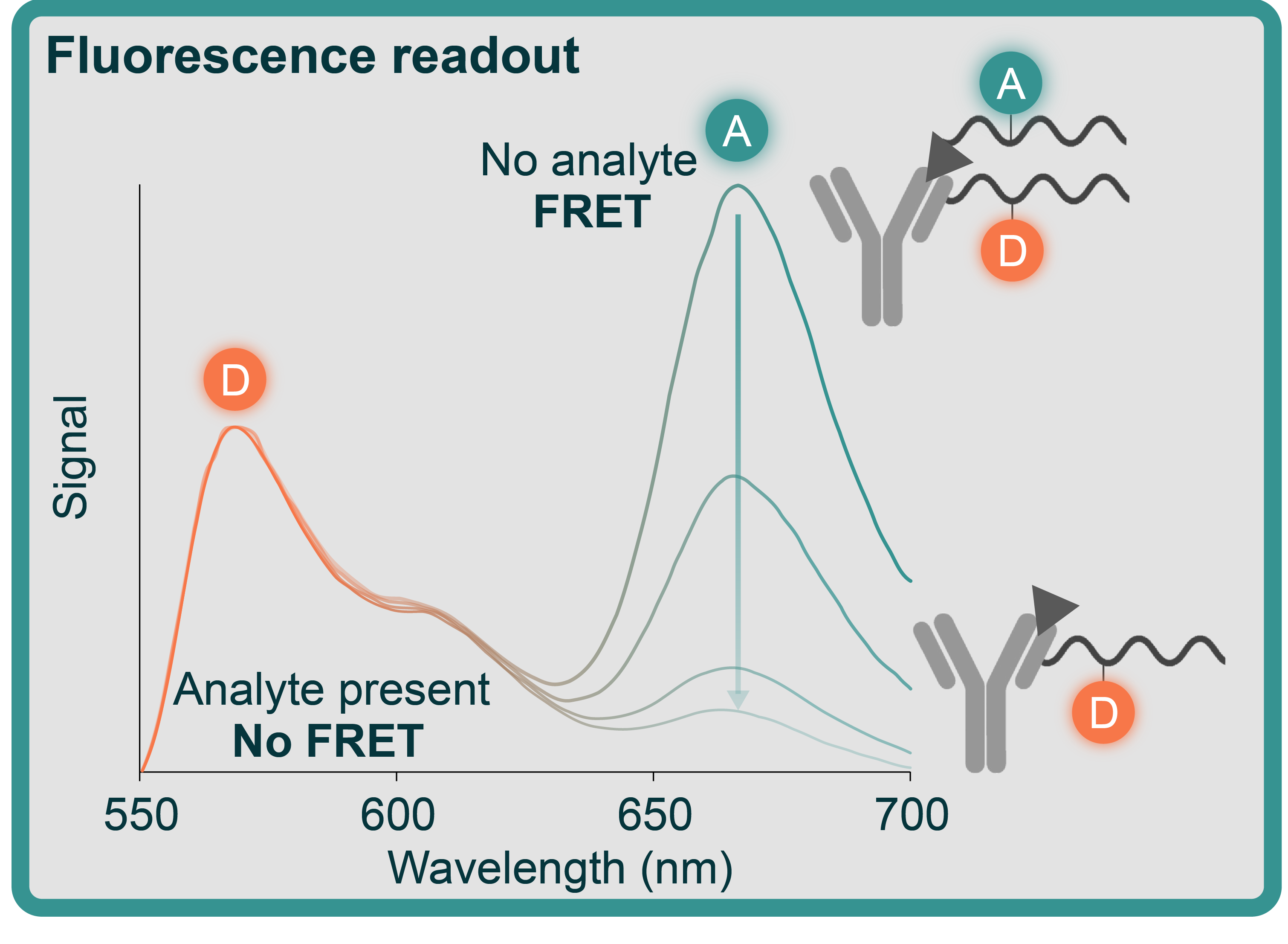
Read out as a ratio of light
The reader excites the Cy3 dye and measures the emission from both Cy3 and Cy5. Without the drug, the dyes sit close together and energy transfers (FRET). With the drug present, they are pulled apart and FRET drops.
The Cy3/Cy5 ratio gives the quantitative readout.
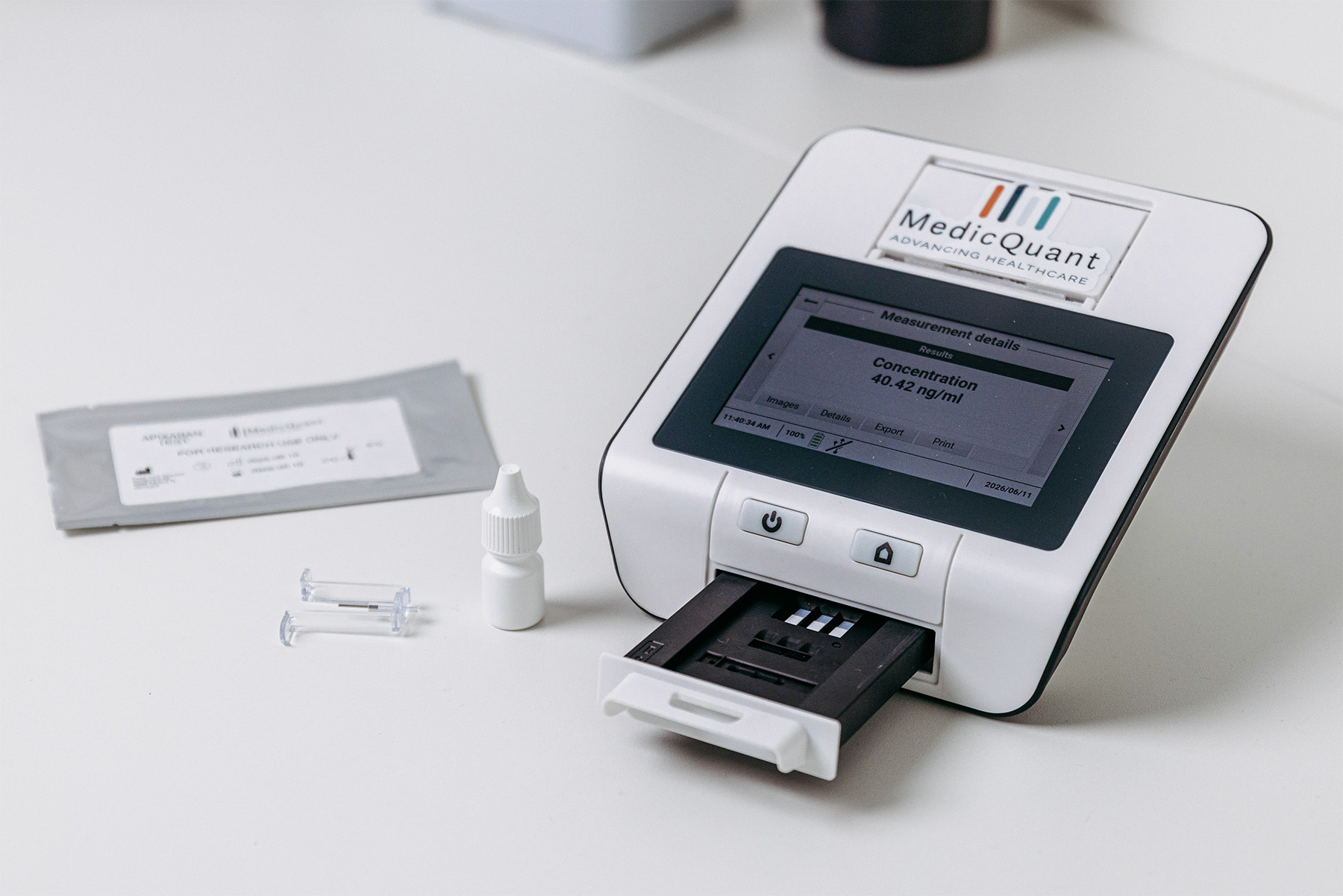
A result in 10 minutes
The reader displays the DOAC concentration directly from whole blood in 10 minutes, with accuracy comparable to laboratory standards. Users at relevant sites rated the system easy or very easy to use.
The method is published in ACS Sensors (2 July 2026). Read the paper
Why stroke care is the first application
Many stroke patients take direct oral anticoagulants. Before giving thrombolysis, clinicians need to know how much drug is still active, and today that answer comes from the central lab.
Key opinion leaders in the US, the UK and Denmark described the need for rapid DOAC testing. One neurologist put it simply: DOAC levels are "the only thing we wait for currently before thrombolysis."
The same platform has shown proof of concept for antibiotics, anticancer and antirheumatic drugs.
Clinical partner, distributor or investor?
We are happy to share data and arrange a demonstration of the reader.
Contact MedicQuant